
🗣️ Hablamos español
Tesla Wall Connector & Home EV Charger Installation in the Bay Area: What to Know
Driving electric is a lot easier when you can charge at home overnight. A Level 2 charger, like a Tesla Wall Connector, charges much faster than a regular wall outlet. But it has to be sized and installed for your home's electrical system. Here's what we look at on every EV charger job in San Francisco, San Leandro, Oakland and the rest of the Bay Area.
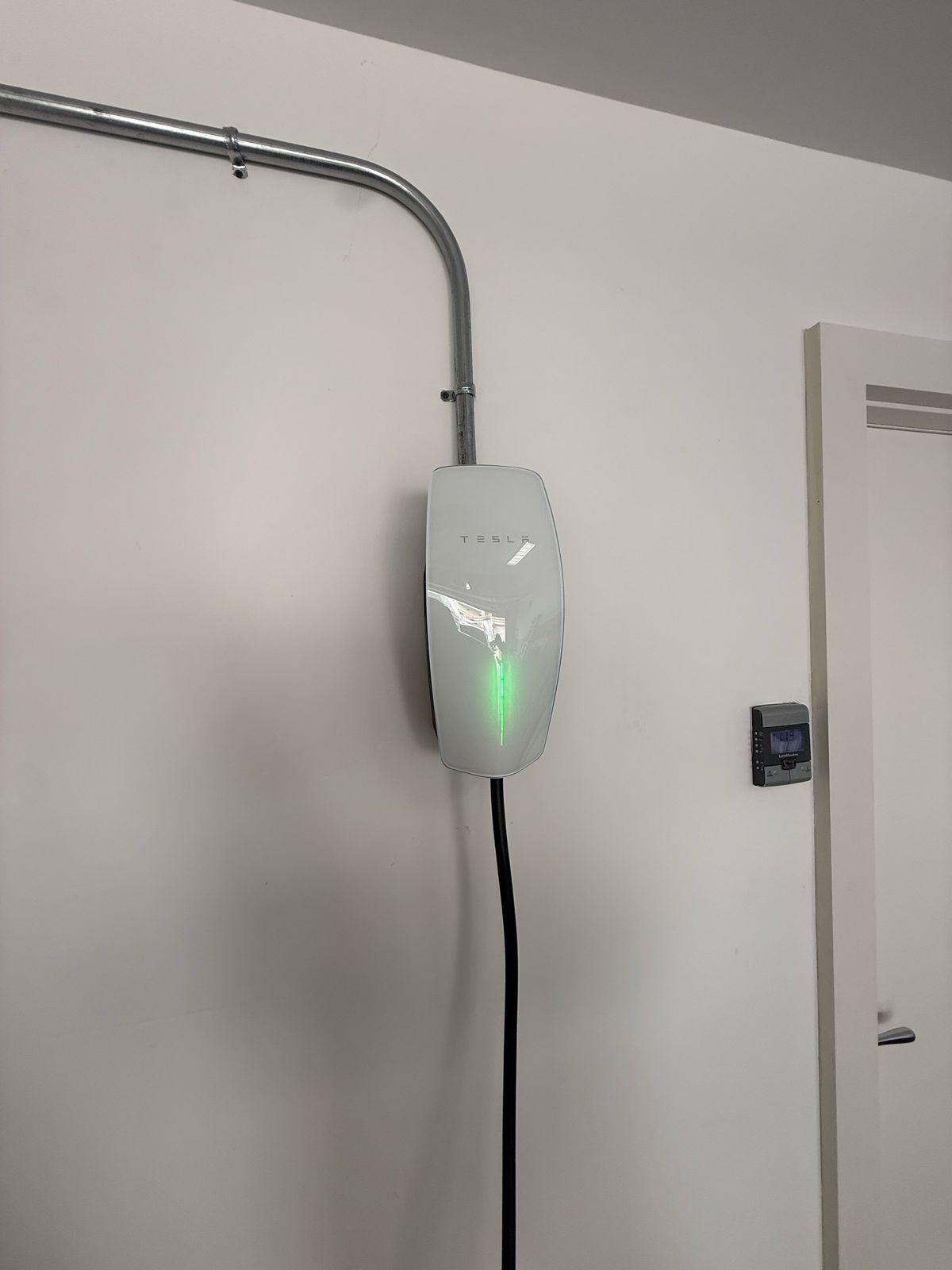
1. Start with a panel capacity check
The most important step happens before anything is mounted on the wall. An EV charger is a large, long-running load, so we check:
- Your panel and service size (many older Bay Area homes have 100A service or less)
- What's already on the panel: dryer, range, water heater, heat pump, AC
- Whether there is physical space for a new breaker
- The condition of the panel itself (some older panel brands should be replaced, not added to)
From there we do a load calculation and recommend a circuit size that fits your home safely.
2. Load management: charging without a panel upgrade
If your panel is close to its limit, a full panel upgrade isn't always the only answer. Many chargers, including the Tesla Wall Connector, can be set to a lower charging current, and some setups can share or manage power so the charger slows down when the house is using a lot of electricity. It can be a good option for homes that can't easily add capacity. We'll tell you honestly whether it fits your situation.
3. Permits and inspection
A hardwired EV charger circuit needs an electrical permit and an inspection from your city. We pull the permit, install to code and coordinate the inspection. In San Francisco alone we've completed 6 EV charger permits filed with the City (source: DataSF public permit records). See our permitted work in San Francisco.
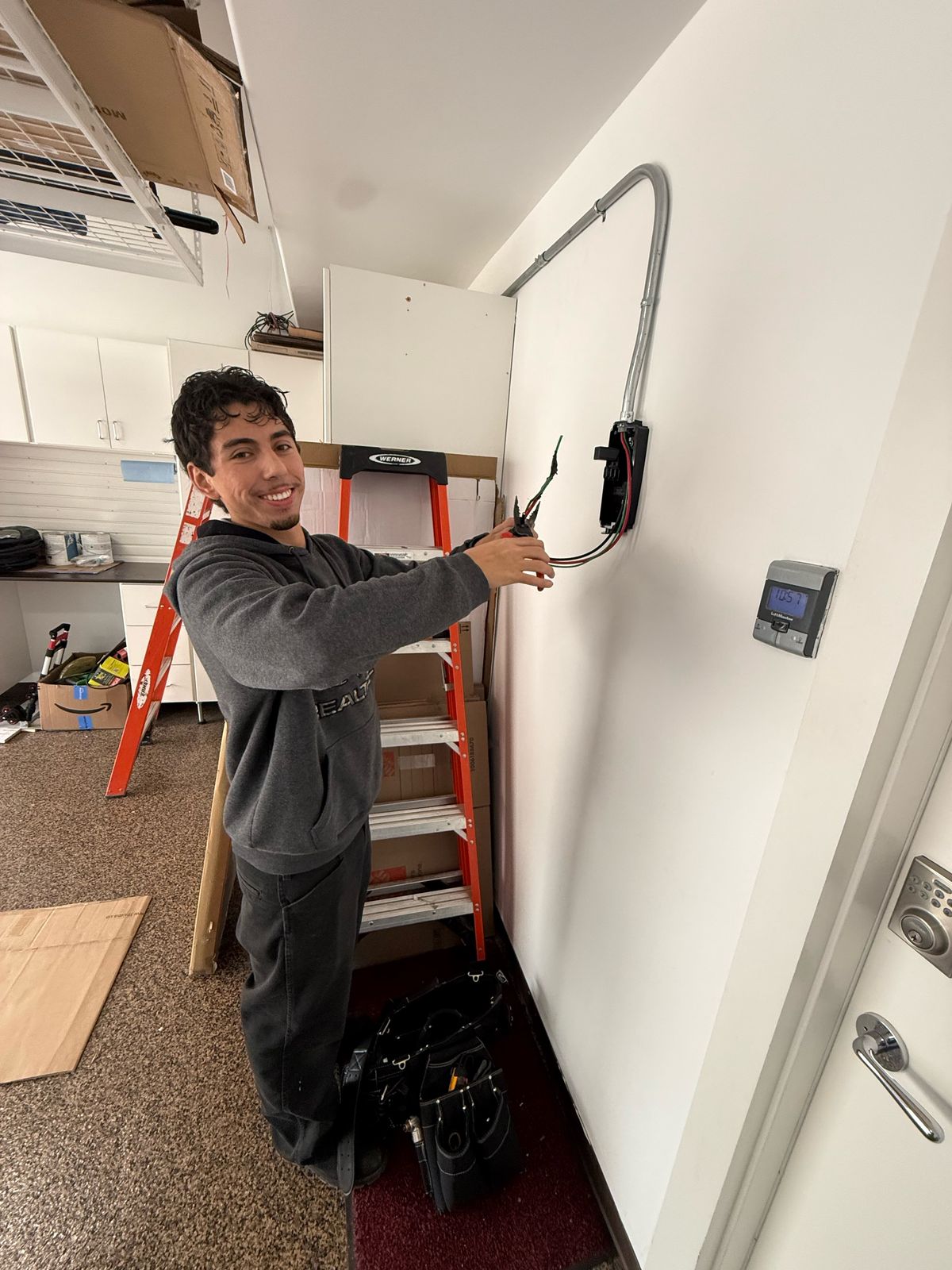
4. Garage or exterior: picking the right spot
- Garage: the most common spot. We plan the location so the cable easily reaches your charge port, and run conduit neatly along the wall.
- Driveway or exterior wall: use a charger rated for outdoor use, and we use weather-appropriate fittings and conduit.
- Distance from the panel: longer runs mean more wire and conduit, so we plan the most practical route.
- Condos and HOAs: shared garages need coordination with the HOA or property manager. We work with both.
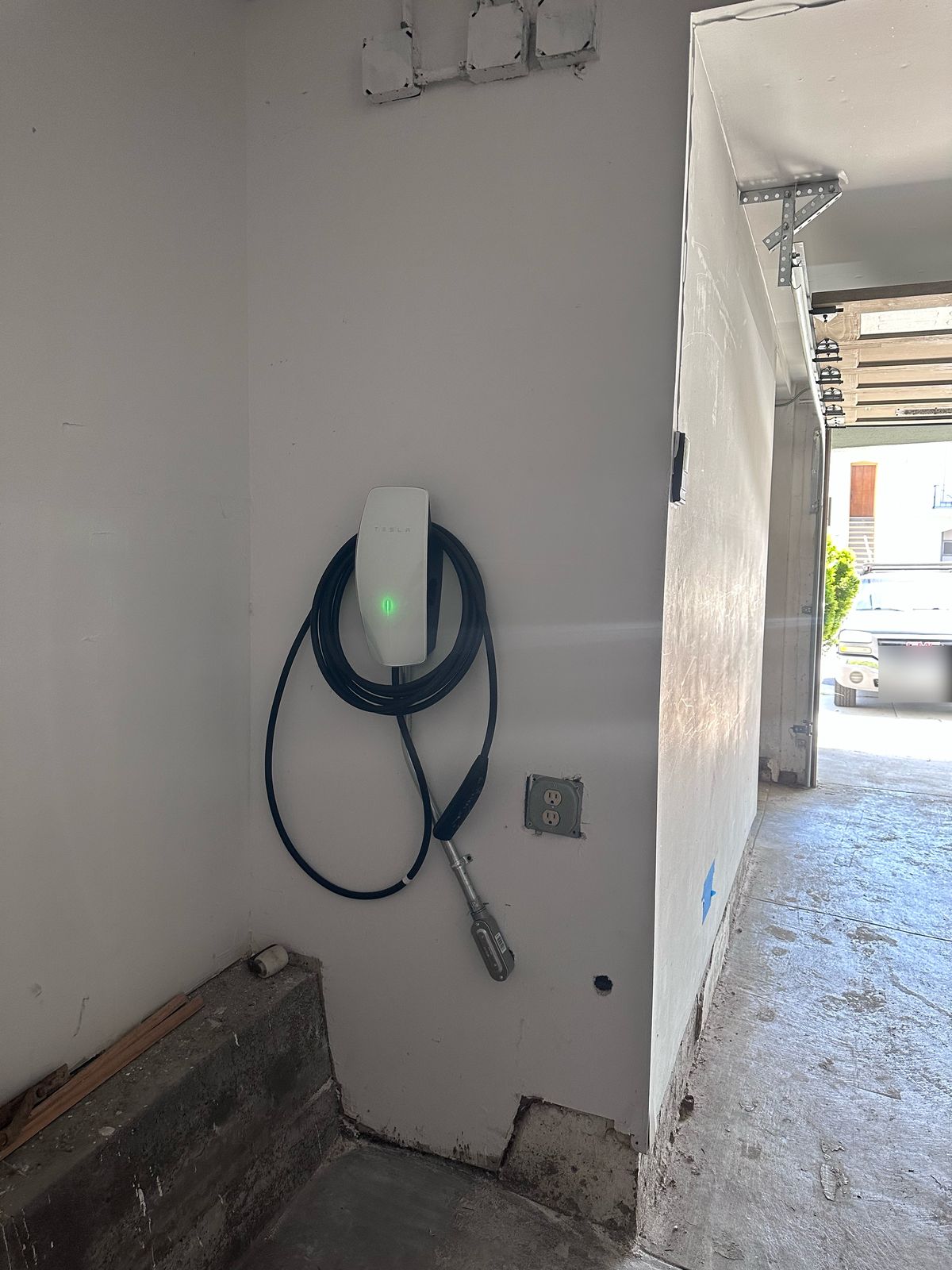
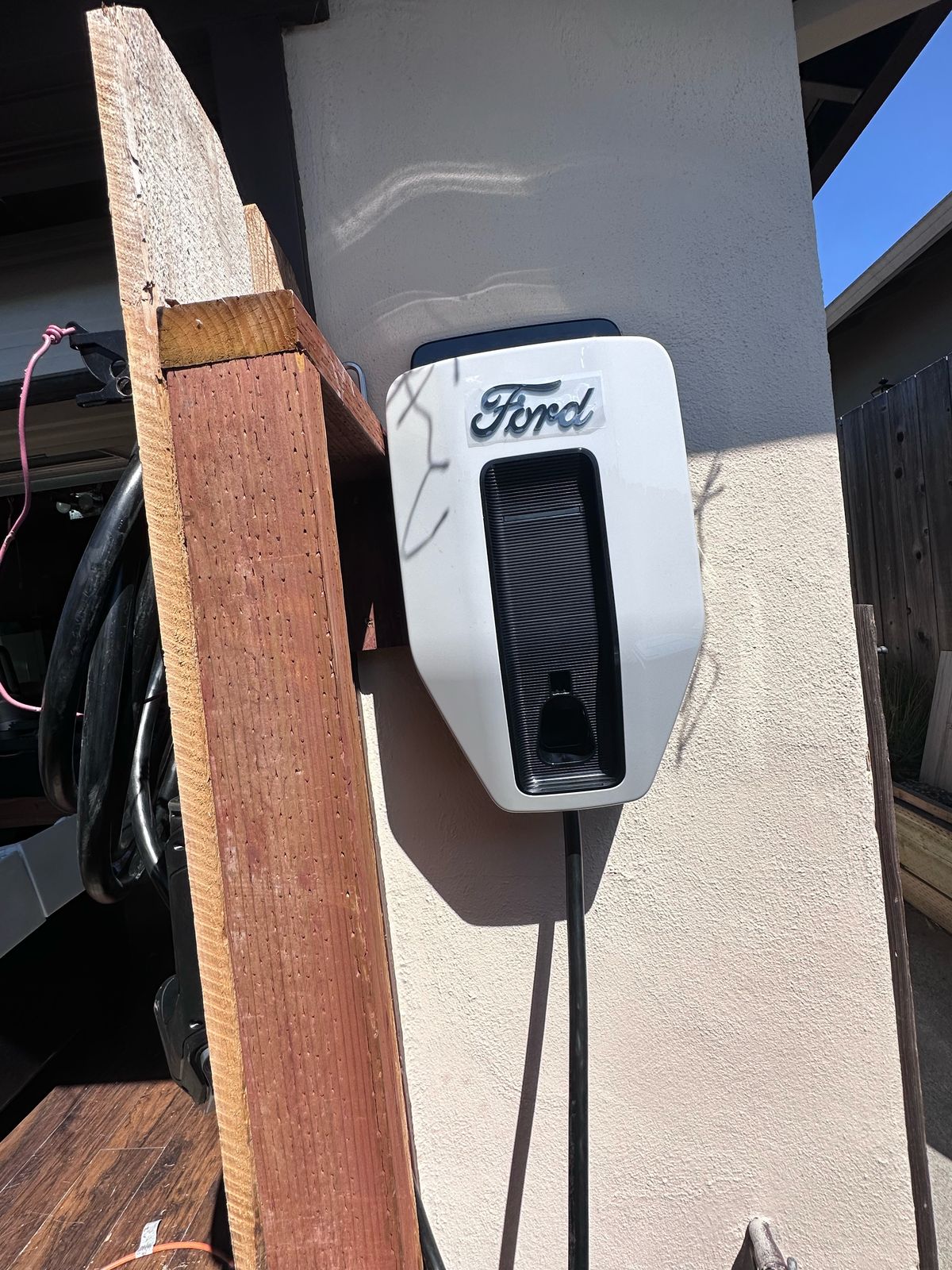
5. Tesla Wall Connector vs Ford Charge Station Pro vs Emporia
We install all of these, and the right one depends on your car and your plans:
- Tesla Wall Connector: a clean, compact unit for Tesla owners. It can be configured for the circuit size your home supports.
- Ford Charge Station Pro: designed around Ford's electric trucks, like the F-150 Lightning. It's a larger unit that needs a larger dedicated circuit.
- Emporia and other J1772 / NACS chargers: good options when you have a non-Tesla vehicle, more than one EV brand at home, or want features like a long cable.
6. When a panel upgrade makes sense
A panel upgrade is usually worth considering when:
- The load calculation shows your service can't support the charger, even with load management
- There's no room for new breakers
- You also plan to add a heat pump, induction range, AC or an ADU
- The panel is old, damaged or a brand that should be replaced
Read more about our 100A to 200A panel upgrade process.
Ready to install your EV charger?
We're a family-owned, licensed, bonded and insured electrical contractor (CA C-10 #1132664) serving San Francisco, San Leandro, Oakland, Alameda, Hayward, Berkeley and nearby cities. Free estimates on most residential jobs. Hablamos español.
Learn more on our Tesla Wall Connector installation page.
Call (415) 323-9494 or book online. Hours: Mon–Fri 8am–5pm · Sat 8am–4pm.
📞 Call (415) 323-9494 Book Online